What a biological age test measures
Chronological age is the time elapsed since birth. A biological age test instead seeks to describe aspects of processes associated with aging using measurable indicators. The two pieces of information are related, but they are not the same: knowing how old a person is does not tell you the result of a biological model applied to that person’s sample.
In epigenetic tests, the information analyzed concerns DNA methylation. Some models, also called epigenetic clocks, use methylation levels at specific sites on the DNA to produce an estimate. Not all clocks were built with the same objective: some were developed using chronological age as a reference, while others incorporate information related to health outcomes or seek to estimate the pace of aging.
This distinction is useful even before choosing a test. A figure expressed in years may seem straightforward, but its meaning depends on the model that generated it. To make sense of it, it is not enough to ask, ‘How accurate is my biological age?’ It is also necessary to ask what characteristic the test is intended to estimate and what data were used to develop it.
Which sample is analyzed
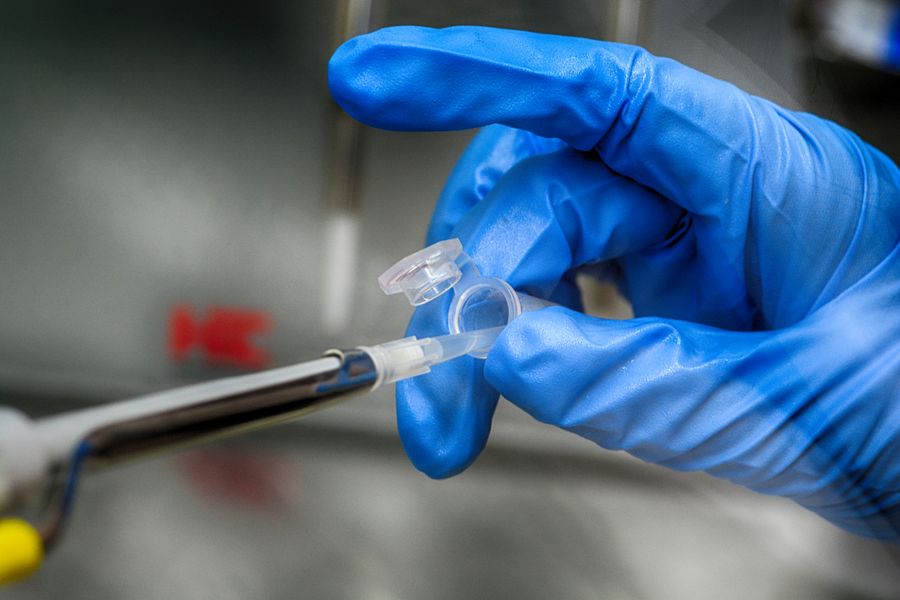
The sample is the biological material from which the data needed for analysis are obtained. Blood plays an important role in the studies considered here: the DNAm PhenoAge biomarker was developed using whole-blood data, while DunedinPACE was built as a measure of DNA methylation obtained from a blood test.
There are also models studied across multiple tissues. A multi-tissue predictor of DNA methylation age was developed using 8,000 samples from 82 data sets, comprising 51 healthy tissue and cell types. The model was designed to estimate the methylation age of most tissues and cell types considered applicable.
This does not mean that a result obtained from any sample can be interpreted as identical to one obtained from blood. When evaluating a test, it is useful to identify the sample it requires and check whether the stated model was developed or studied for that material. The practical question is: ‘Does the research presented involve the same type of sample that will be analyzed in my case?’
How an epigenetic test works
In general terms, the process moves from a sample to a set of DNA methylation measurements and then to a calculated result. The laboratory does not directly observe a single property called ‘biological age’: it detects information about sites on the DNA, and a model combines that information according to criteria defined during its development.
One documented example is the multi-tissue clock that uses 353 CpG sites. In the study abstract, these sites are described as the elements that together form the clock. That number is a characteristic of that particular model, not a rule that applies to all epigenetic tests.
To understand how a biological age test works, it therefore helps to distinguish three levels: the type of sample, the methylation features being analyzed, and the model used to turn them into a result. Two tests can both call themselves epigenetic without using the same set of information or answering the same question.
If the documentation names the model, looking for an explanation of its objective also helps give meaning to the final number. If the model is not identified, on the other hand, it becomes harder to connect the result to the available research.
Why epigenetic clocks are not all the same
The first generation of epigenetic biomarkers of aging was developed using chronological age as a substitute for biological age. In other words, the main reference for building those models was the time elapsed since birth. A result derived using this approach should be read in light of that objective, not as a direct and complete measure of health status.
DNAm PhenoAge takes a different approach. The authors developed the biomarker by incorporating a composite clinical measure of phenotypic age, intended to capture differences related to lifespan and the period lived in good health. In the study, DNAm PhenoAge showed better predictive performance than earlier measures for several aging outcomes, including all-cause mortality, cancer, and physical functioning.
These findings concern performance observed in research. They do not turn an individual estimate into certainty about a specific outcome. Moreover, the fact that two models can both relate to aging is not enough to assume that their numbers are interchangeable. Before comparing them, it is necessary to know what each was designed to represent.
Estimated age and pace of aging: two different questions
A result may concern not only an estimated age but also the pace of aging. DunedinPACE is an example of a DNA methylation biomarker developed with this second objective. The authors used data from a cohort of people born in 1972–1973 who were followed at four time points over two decades.
To build the model, they considered decline within the same person across 19 indicators of the integrity of body systems. They then derived from that measure observed over time a biomarker that could be obtained from a blood test at a single point in time. The resulting model was also evaluated in five other data sets.
In the study, DunedinPACE showed high test-retest reliability and was associated with morbidity, disability, and mortality. The high reliability observed is an important property of the biomarker studied, but it does not mean that every individual change observed with any test automatically has clinical significance.
The practical distinction for the reader is this: ask whether the report presents an age, a comparison with chronological age, or an estimate of pace. These answer different questions and should not be read as if they were the same result.
How to read the result without confusing a measurement and an estimate
The initial measurement concerns DNA methylation in the sample; the final value is an estimate produced by the model. Even when the report uses the unit ‘years,’ that number does not change chronological age and does not by itself describe every aspect of the body. It is the result of a calculation based on the information selected by the model.
Imagine, solely as an example, a 50-year-old person who receives an epigenetic estimate of 53 years. The difference describes the comparison between that result and chronological age according to the method used. On its own, it does not establish that the person has a disease or predict how many years they will live. Interpretation requires at least the model’s name, the sample analyzed, and an explanation of what the model estimates.
The opposite example calls for the same caution: an estimate below chronological age does not demonstrate the absence of disease or guarantee a particular lifespan. The value may be interesting as an indicator studied in research, but it does not replace other relevant health information.
A simple way to read the report is to separate what was measured from what is inferred. You can note ‘methylation in the sample’ for the analytical part and ‘model result’ for the estimate. This distinction makes it less easy to give the number a broader meaning than the evidence supports.
What associations with health and mortality mean
Studies report associations between some epigenetic biomarkers and important outcomes. For DNAm PhenoAge, the authors evaluated, among other outcomes, all-cause mortality, cancer, physical functioning, and Alzheimer’s disease. For DunedinPACE, associations with morbidity, disability, and mortality were reported.
An association observed in research data is different from an individual diagnosis. It means that the biomarker contains information linked to the outcomes studied; it does not mean that a single person’s result determines with certainty which outcome will occur. Even the term ‘prediction’ in a study must be distinguished from a promise to know the future of someone taking the test.
The DNAm PhenoAge study also found associations between an epigenetic age higher than chronological age and signals related to several cellular processes, including pro-inflammatory and interferon response pathways. These are research findings about mechanisms associated with the biomarker, not a complete individual reading of those processes.
The useful question to bring to a result is therefore: ‘Is this a direct measurement, a model estimate, or an association observed in a study?’ The three categories can be connected, but they are not equivalent.
What to check before evaluating a test
The first criterion is transparency about the model. Check whether the clock or biomarker is named and whether the material explains what it produces: an age estimate, a comparison with chronological age, or a measure of the pace of aging. A generic description using only the term ‘biological age’ leaves these differences unresolved.
The second criterion concerns the sample. Check what material will be analyzed and ask which samples underpin the studies cited for the model. For example, knowing that DNAm PhenoAge was developed using whole-blood data is more informative than the statement that a test is simply ‘science-based.’
The third criterion is the relevance of the evidence. A research finding about one specific model does not automatically demonstrate the performance of another model. Look for an explicit connection between the method offered and the one described in the studies, as well as an explanation of the result’s limitations.
Finally, consider whether the report distinguishes what the test can estimate from what it cannot establish. If it presents a number as a diagnosis or as certainty about lifespan, it assigns the estimate a meaning that the studies considered here do not allow anyone to guarantee.
How to think about different or repeated results
Suppose, hypothetically, that a person compares two reports obtained using different models and finds different values. Before treating them as contradictory, they should check whether the tests analyzed the same type of sample and, above all, whether the models were developed to answer the same question. An estimated age and an indicator of the pace of aging are not necessarily equivalent versions of the same measurement.
Knowing the method is also important when evaluating a repeated result. The DunedinPACE study examined test-retest reliability and reported a high result for that biomarker. This information helps explain a property of the model studied; it does not provide a universal threshold for interpreting every change in every person.
If a number changes, comparing the values alone does not demonstrate what caused the change. The available material provides no basis for automatically attributing an individual difference to an intervention or a single habit. The more cautious approach is to retain the context: the model, the sample, the meaning of the result, and the available information about its performance.
Strength, sleep, and other information: where the test fits
Someone who pays attention to strength and sleep may be interested in an additional measure of aging. An epigenetic test, however, answers a specific question about DNA methylation and the model applied: it does not directly measure the person’s sleep quality or strength. Even an association between a biomarker and physical functioning in research is not equivalent to a direct assessment of an individual’s strength.
For example, a person might record their epigenetic result and their own observations about sleep separately. This is an organizational distinction, not proof that one explains the other. Similarly, a reported change in strength cannot be attributed to the epigenetic result on the basis of the studies considered alone.
The final principle is to keep conclusions proportionate to the original question. If you want to know the estimate produced by a particular model, a transparent report can provide that information. If, instead, you are looking for a diagnosis, a certain prediction, or proof that a specific habit has changed aging, the test number alone is not enough.